
What is a Honeypot

コース全体からもっと学ぶ
Microsoft Security Fundamentals
Learn Windows Security: Windows Hardening, Firewalls, NTFS Permissions, Active Directory, AppLocker, BitLocker and More
13:05:12のオンデマンドビデオ • 更新日: 1月 2026
Build a basic Windows security lab environment with VirtualBox, Windows Server 2016, and Active Directory to follow along with demonstrations
Understand BitLocker and BitLocker To Go encryption through hands-on demonstrations
Learn about AppLocker and Software Restriction Policies and see them configured in live demonstrations
Understand NTFS permissions, share permissions, inheritance, and effective access through guided demonstrations
Learn Active Directory security fundamentals including groups, organizational units, delegation, and basic Group Policy configuration
Understand Windows password policies, account lockout policies, and audit policies through demonstrations
Learn about Windows Encrypting File System (EFS) and see encryption concepts demonstrated
Understand Windows Firewall configuration and the difference between hardware and software firewalls
Learn about network isolation techniques including VPNs, IPSec, VLANs, and perimeter networks
Understand Windows hardening using User Account Control (UAC), Windows Defender, and security best practices
Learn about RADIUS authentication through live demonstrations
Understand the Windows Registry and its role in system security
See DNSSec and secure dynamic DNS updates demonstrated on Windows Server
Learn to analyze network traffic with Wireshark to understand protocol security and common attacks
Understand encryption fundamentals including symmetric, asymmetric, hashing, and digital certificates
日本語 [自動]
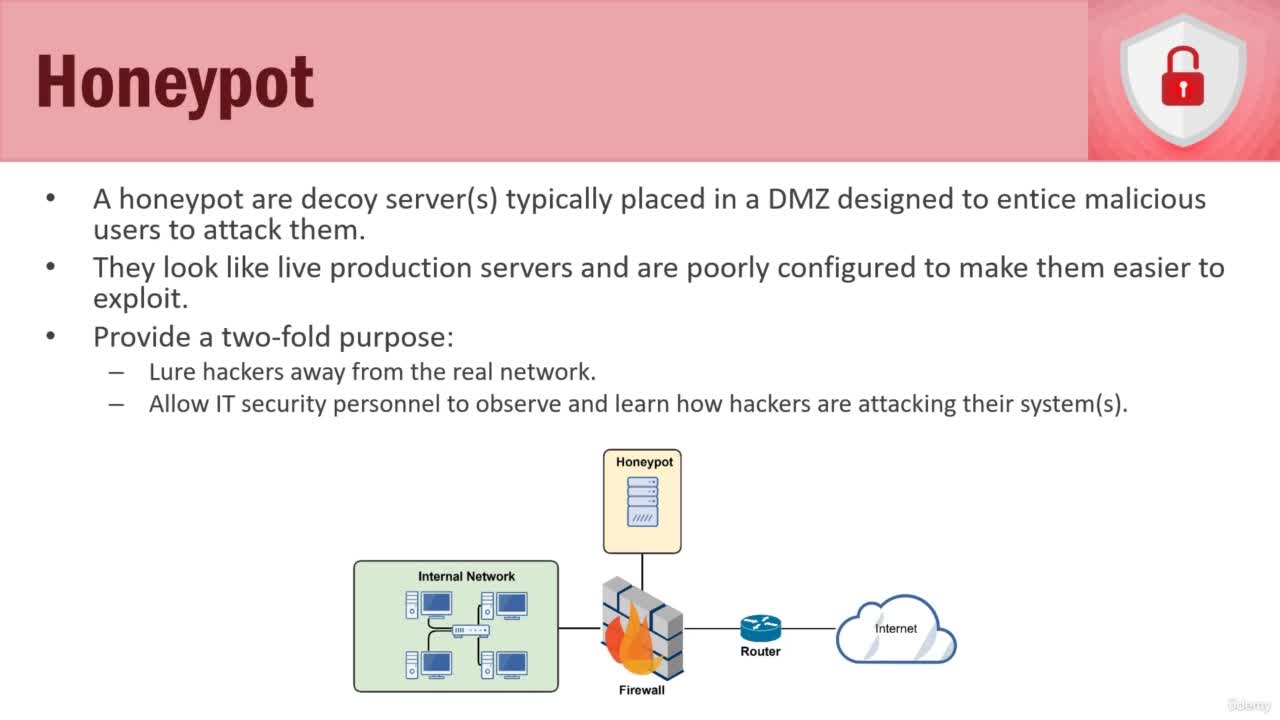
このビデオでは、 ハニーポットについてお話しします。 では、 ハニーポットとは何か? さて、 これがハニーポットの図だ。 ハニーポットとは、 おとりサーバーや複数のサーバーのことで、 通常はDMZに置かれる。 ファイアウォールがあり、 ここにハニーポットがあるDMZがあり、 ファイアウォールの別のインターフェイスで内部ネットワークが保護されている。 ハニーポットがDMZにある目的は、 悪意のあるユーザー、 つまりハッカーに内部ネットワークではなく、 ハニーポットを攻撃するように仕向けるためだ。 それで、 これはどのように機能するのか? まあ、 本番サーバーと同じように見えるようにセットアップされている。 しかし、 I. Tの担当者は、 実際の本番サーバーよりもはるかに悪用されやすいような、 お粗末な設定をしようとしている。 つまり、 攻撃しやすく、 侵入しやすく、 悪用しやすいのだ。 では、 なぜハニーポットを使うのか? まあ、 2つの目的がある。 最初のものは、 もちろん理にかなっているし、 ハッカーを実際のネットワークから遠ざけるためのおびき寄せるものだ。 だから、 本番の内部ネットワークよりも、 ハニーポットを攻撃してもらうほうがずっといい。 もうひとつは、 ハニーポットが私たちのi. ハッカーがどのように私たちのシステムを攻撃しているかを観察し、 学ぶために。 私たちは、 彼らがどのように私たちのシステムの弱点や脆弱性を突いているのか、 その手法を学ぶことができる。 それがハニーポットなんだ。 そして、 私が言ったように、 それらは通常、 実際の物理サーバーになりうるDMZ内にセットアップされる。 複数のサーバーであったり、 1つの物理サーバー内に仮想化された複数のサーバーであったりする。 どのようにセットアップするかは、 組織によって異なる。 しかし、 私が言ったように、 彼らは通常、 私たちのファイアウォールの別のインターフェイス上の独自のDMZにセットアップされています。 そして、 ネットワークの分離に果たす役割に関しては、 内部ネットワークではなく、 少なくとも攻撃者をネットワークの分離された部分に誘い込む役割を果たす。 これで、 Honeypotについての簡単な紹介と概要は終わりです。 何か質問があれば言ってください。 もしそうでなければ、 見てくれてありがとう。